


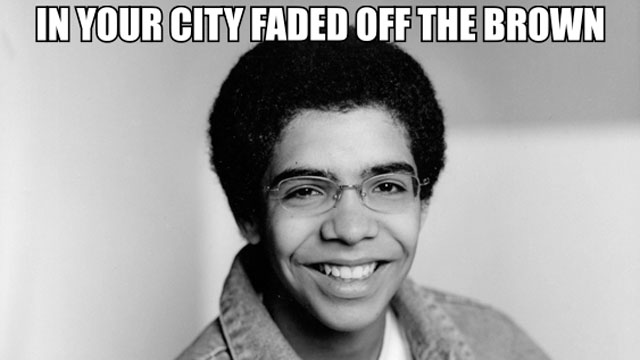

A Bronx Tale: In Search of Sonia Sotomayor from weekendvids on Vimeo.
Talking with The Roots (pt.1) from weekendvids on Vimeo.

The Latest
Saturday, March 21, 2020


Thursday, November 07, 2019
It's Alive?!??!
Mostly Letters & Words:
Grantland (RIP): Otis, Roger Ebert, Notes on Prep School Rap Videos
Gawker (RIP): My first, my last, a photo tour of Spanish Harlem, going to the Bronx to talk Sonia Sotomayor (video), The Sasha Grey Interview Experience was controversial.
The Root: Obama Dap Day (quel scandale! those were the days...)
Vulture: James Earl Jones 🤔
N+1: Hipsters and Hip Hop
Negropedia
Now, new and improved...


Sunday, September 30, 2012
Ghetto Pass: Extracurricular
 So this week's installment of Ghetto Pass is on The Corner Bodega.
"NY ain't the same, it's OT playa
you can go and cop coke from the corner bodega..."
- 50 Cent, Corner Bodega
On the surface you might think the Corner Bodega (Co-Bo) is just another wiki-able oasis of convenience. A sort of de facto ghetto 7-11. But, like the big rock in the forest, a look underneath reveals a self-sufficient ecosystem of subterranean life. Home of the 2 for $1 special, the Corner Bodega is the ghetto chamber of food and commerce for marginalized gentri-folk and ne'er-do-wells alike. Typically open through the wee hours, and stocked with all the bare essentials -- food, alcohol, horny-goat weed -- Corner Bodegas are not only a full service resource, but a genuine lifesaver.
more ...
An authentic Bodega needs to do more than sell candy-bars and speak English as a second language. Those "mini-marts" downtown with flowers and fruits are not Bodegas. There are basically two types: vintage corner bodegas are a full sensory experience; while your eyes feast on the colorful awnings and scan the lucky dollars taped to the walls, your ears engage with the sweet sound of salsa/meringue, or perhaps baseball on the radio. The air is thick, and the atmosphere is friendly and community-oriented. Even if lacking customers, all corner bodegas come standard with an old Spanish dude who sits around like a period-piece prop. Be sure to say hi. The modern version eschews the tradition and ambience for technology and an aesthetic of minimalist sterility. They're cleaner, and provide more options, but the experience is a bit more generic. Generally speaking, vintage Bodegas are run by "papi," and modern editions are run by "habibi."
Things You Should Know: Every Corner Bodega has four primary sections:
Behind the Counter - Here you'll find your usual array of dentist-financing candy and candy bars. Sugary staples like Swedish Fish, Now&Laters, and Blow-pops are abundant. Menthol cigarettes, ribbed condoms, cough-cold medicine, and assorted flavors of blunts are among the more popular items.
In the Aisles - Bodegas are renowned for their delicious and economically prudent array of snacks. You'll find these in the aisles, along with standard supermarket fare. Watch out for random mind-boggling markups; Bodegas are notorious for arbitrarily charging $8.79 for a small can of tomato paste.
Up High - High on the walls you'll find paper products, garbage bags, and cleaning stuff. When the wallet's not packing enough heat to cop luxury brands like Bounty, Hefty, and Mr. Clean, the Co-Bo always has a $1 line of generically-effective paper products and cleaning supplies.
Keep It Cold - Need alcohol on a budget? The Co-Bo has you covered. Their refrigerators are well fortified with affordable Fortys, deuce-deuces, Tallboys, and much much more. In the freezer, Häagen-Daz is the official ice cream of Corner Bodegas everywhere.
General Tips
The Night Window - At a certain hour, most Corner Bodegas will close the front door and direct all customers to the nighttime "walk-through" window. You will need to have a good idea of store inventory and product placement, as papi/habibi will have to fetch items for you. No one likes to fetch, or stand in line, so everyone is significantly more ornery; as such this is no time for cheeky chicanery or getting-to-know-you chumminess. Place your money in the revolving door, take your bag of goods, and hope it contains what you asked for.
Looseys!!! - Corner Bodegas are the birthplace of the greatest product invention known to man: the loose cigarette. For social smokers and permanent would-be quitters, looseys are a godsend. Unfortunately, like the African lion, the Co-Bo's that still sell looseys are fast becoming extinct.
Habibi Say - Use the shady ATM only if you are currently considering a change of identity.
Where Everybody Knows Your Name - Become a regular at your local Bodega and you get perks. For example, it will be the only store where you get to say, "I'm short right now papi, but I'll pay you later, you know I'm good for it" without getting back-hand slapped to the beat of the last Three 6 Mafia album.
Fun Facts
• Did you know the national animal for corner bodegas is the cat? Kittens are occasionally spotted, but usually you will have a veteran cat who has seen them all come and go and will therefore pay you no mind as you try to get around his lounging in the aisle.
• Did you know "dutches" are the most popular brand of cigar in Corner Bodegas (despite the lack of victory celebrations in the ghetto)? To impress the locals, ask for a "strawberry dutch" to go with your $3 ham-and-cheese, Lil Debbie cake, and bag of Utz chips.
• Did you know Co-Bo patrons are advised to ignore expiration dates and discern the age of their product via the layer of dust on it? The thinner the better.
Ghetto Terror Alert: Pink. Attractive women in general are always under a moderate level of stress, as the same people catcalling you on the street often congregate in the corner bodega. It's like HQ for cat-callers. You might refer to it as a cat-call center.
Slang Check: The only key slang in a Corner Bodega is for some of the products. Terror Alert aside, looseys refer to the same single cigarettes, not women, regardless of their sexual proclivities. "Dutches" are Dutchmaster cigars, they go well with marijuana.
+++
This guy does some interesting Bodega based art [BodegArt]
I ended up cutting some bits about the Corner Bodega as a front for weed spots and numbers spots. Ultimately I had the 50 quote, and do think, as with the loosey cig, those bodegas are becoming extinct.
Apparently the Corner Bodega might be under siege. "The corner store vs. market reality" [The Real Deal]
I also cut bits about the gross lack of fresh food/produce at bodegas, but the Huffington Post has an interesting blog about a program to get more organic and healthy stock. "Foodies in 'da Hood"
Finally Ezra Klein explains "Why Immigrants Run Bodegas."
Ghetto Pass: The Corner Bodega [Gawker]
Ghetto Chinese Spot Excess [TAN]
Saturday, September 29, 2012
The Case of Will Leitch & The Burning Q-Tip
 The Case of Will Leitch and the Burning Q-Tip
PART 1.
Mr. and Mrs. Negro had one child. They called him TAN, and so did everybody else.
Mr. Negro was the head of all media, and the chief mind on matters of race and culture. The CEO or Chief Ethnocultural Officer. Whenever a TV station or radio show or magazine needed counsel, ideas, or understanding of some race/culture related issue, they’d ask Mr. Negro. And Mr. Negro always had a good answer for them. His track record in the realm of race was without blemish since 2005.
But Mr, Negro had a secret weapon. And that was his son, TAN. No one would believe it, but it was really TAN that provided Mr. Negro all his fodder. The streak since 2005 was no coincidence; it was also when young TAN started his blog.
Now TAN would help typically help his father solve cases for free. But after a while he realized he enjoyed ethnocultural matters so much he should open up a detective agency to help others solve the mysteries of race and culture. So he stole some money out of his father’s wallet, rented out a bodega, and set up shop. He hung up a sign to advertise himself:

As fate would have it, one evening around midnight Q-Tip came marauding into the office. He was clearly bothered by something. Q-Tip, of course, is a living legend, the lead rapper of iconic hip hop group A Tribe Called Quest. TAN immediately roused to attention upon recognizing the face.
Tip scanned the sign and fished around in his pockets. Eventually he took a quarter-water out from inside his jacket and looked TAN in the eye, "I don't have any change on me, but I can give you this drink. I have a problem, and I want to hire you." Apparently Tip had happened upon some tough fiscal times of late.
TAN looked at the quarter water. It was cherry flavor. His favorite. He smiled and reached for the Bible on the desk that he hollowed out and used as protection for his copy of The Low End Theory. He lifted the CD towards Q-Tip and said, “Yo, Tip. Do you know how much prep school and college cooch this CD got me? If Obama owes something to the Cosby Show, then they owe something to you as well. You’re the soundtrack of our assimilation. Certainly mine. I’ll take the quarter-water -- cause you know I love me some cherry drink -- but trust, i got you on expenses and all of that for this case.”
“So, now, tell me, what’s the scenario? forgive me, but ... you on point, Tip?” TAN asked.
“all the time, tan!” Tip chorused back.
Q-Tip was calmer after quoting an old classic. but he was still pacing as he spoke, “I don’t know why I’m bugging out. But there's this crazy article online. I think it's offensive, but I'm not quite sure. it just feels wrong.”
TAN was puzzled, "well, it’s an internet article. why don’t you just ignore it?"
"hmmm, well yeah, I was going to do that.... but then after i read it I decided to say something."

“You COMMENTED?!!?” TAN knew entering the world of anonymous commenters could only spell trouble for a veteran hip hop artist .
“What did you say, tip?”
uh,something like this:
Friday, February 24, 2012
Ghetto Pass Classic: The Cipher
 This week's Ghetto Pass we take a Hip Hop spin and explore The Cipher:
It is a telling indictment on the flimsy state of Hip Hop right now that emcees and the music they create are inescapable, but The Cipher, where all the great rap craftsman honed their skills, is a fading institution. There was a time when ghetto streets were perpetually filled with the sweet sounds of beatboxing overdubbed with sharp, rhythmic staccato flows. The Cipher was hip hop's training ground, where the architects of the renaissance learned to express in different ways, and the crowd was always the final arbiter of talent. Now modern technology allows anyone to have a studio and a dream in the comfort of their own home, and rarely do you experience the art form live outside of a formal venue. There's nothing inherently wrong with this, but it means this week's Ghetto Pass is an old-school edition, as we flashback and examine hip hop's communal dojo, The Cipher. The beat drops after the jump.
Cypher Etiquette Guide: Freestyle cyphers are not totally extinct: You can still occasionally stumble on a good one, particularly outside of hip hop clubs. But the truest cyphers are located on a stoop in front of someone's house, or have just popped up on a city street far removed from clubs or formal venues of any kind. Like unprotected sex, these cyphers are born of a recklessly carnal impulse that demands sating no matter the circumstances.
You need at least three people to have a cypher, otherwise you're just standing on the street rhyming with your friend. Once you got three, someone lights the Olympic torch by dropping a beat, and the cypher has begun. You'll probably want to ease in to your segment with a "yo I'm gonna take this one, check it, uh, uh,... [insert your lyrics here]." cypher sophisticates will often space their intro out, play to the audience, if the beat is hot you usually let it ride a good four bars, let the crowd get a good crisp head nod popping. Then commence to — wait for it — drop it like it's hot.
This is the basic stratification of cyphers, evaluate your skill level and participate accordingly:
Slow-Pitch Softball - In this cypher you'll see three girls, a couple dorky-looking white dudes, maybe the Pakistani guy from around the corner, the Asian gay guy just having some fun; everything goes, everyone is welcome in the Slow-Pitch Softball cyphers. You can be horrible and still get to finish all your material. The worst case scenario might be a slightly muted enthusiasm when you finish, perhaps some polite clapping, but that's all. Most people should play here.
Minor Leagues - In the next level up, you get a more challenging array of demographics. More black guys, and white guys with some actual hip hop history under their belt. No novelty attempts from your grandmother on Christmas here. These are still relatively safe to your ego however, participants are courteous, but you will get silence and some brushing off if you're not up to par. But you'll always get your turn.
The Majors - Pro level Cyphers qualify as fiscally viable forms of entertainment. Participants are rappers you would definitely hear on records ... or should. These cyphers will attract non-cypher people who just want to peep out what's going on, cause it sounds good. Any person who likes hip hop will be physically compelled to stop. Those who stumble or screw their verse up in egregious fashion are at immediate risk of getting skipped and subbed out. If you do get another turn, and once again fail to hold your own, other emcees may likely turn on you, to the enjoyment of the crowd, and the chagrin of your pride. The combination of crowd and aggression may leave you embarrassed and emotionally scarred, so you're advised to approach pro cyphers with caution. Make sure you're ready to play.
Do or Die - These are the most serious cyphers, also the most exclusive. Filled with hardcore street types, these are not necessarily tied into a certain skill level. The big variable here is that you could lose your wallet and other valuable possessions if you don't please the participants. If you're in doubt, don't be a freestyle hero, just keep it moving.
Cypher Demographics - These are some of the people and rappers you may find in your cypher:
• The beatboxer - The uncelebrated hero of the cypher, and hip hop in general. Like the drummer in a band he makes it all go and keeps everything on beat.
• M.C. 2Long - This guy gets a turn and raps for a couple hours, or until the cops come, whichever comes first. He sucks.
• The God - When a true emcee who has honed his skills enters the cypher, everyone knows the god is present.
• Freestyle Femme Fatale - Everyone looks forward to ladies rhyming in the cypher, but they typically disappoint. For the most part female rappers compare to their male counterparts as WNBA players compare to the NBA. You might watch for a little, especially if they're pretty, but they rarely are pretty and even less likely to be worth a ticket.
• Strictly Writtens - Strictly Writtens never go off the head, they always recite premeditated verses. Depending on the vibe this can be a good or bad thing.
• 1Verse - 1Verses have one verse they spit over and over again. If they have friends you'll know when they all chorus in on all the punchlines.
• Big Punnabees - These are the Hispanic guys kicking the Spanglish. Always a nice change of pace if you can pull it off.
• Educated Rappers - Like metaphysical editions of Ghetto Pass, these participants only turn off the crowd through their earnest attempts to demonstrate their intelligence.
General Tips
Know Your Audience - Are they feeling active or bored? Are they white or black? All these things can influence how you rhyme, when you rhyme, what you rhyme about. Be prepared to adjust.
Female Factor - If there are pretty females in the audience prepare for the cypher intensity to increase exponentially. Cyphers are charged with testosterone, the presence of a potential prize only raises the stakes.
Fun Facts
• Did you know fake freestyling is the cardinal sin of cyphers? You can go off the head or written, but don't pretend it's off the head and then recite the Gettysburg address in your rhyme.
• Did you know rap cyphers are not to be confused with smoking cyphers? There is only one rule for smoking cyphers: take two and pass.
Thursday, February 23, 2012
Songs of Evil: Notes on Whitney Houston's "Saving All My Love For You"
 A few weeks ago they released the 25th anniversary edition of Whitney Houston's debut album, Whitney Houston.
Whitney is sort of fascinating as a human embodiment of the philosophical conundrum of "Theseus' Ship (props to Jen Dziura's one-woman show for reminder on this).
The Ship of Theseus paradox poses questions of identity and authenticity in the form of a riddle/parable: If a ship leaves the port -- in this case Theseus' ship -- and while out at sea has all its planks replaced over time, piece by piece, when it returns to port with all new parts is it still Theseus' Ship?
Now you may or may not know that some scientists will tell you that our cells are regenerating every 7-10 years. In effect, we all have a little Theseus Paradox in us: our whole bodies are renewed over time, piece by piece, but we stay (in some essential way) the same person.
In the case of the fourth best-selling female artist, the paradox is striking: If when we met Whitney she was a god-fearing, clean-cut, singer from heaven, and then twenty years later all of her cells have changed, and she's a crack-smoking, Bobby Brown f'ing, reality show ghetto diva doing very little singing. Well, is that still Whitney Houston?
I don't know.... But, uh, ANYwhitney, I didn't want to unpack our enigmatic angel in this post, but rather her song, "Saving All My Love For You" which got stuck in my head upon revisiting her debut album.
Have you listened to this song recently? I personally had not, and after being briefly enamored with the parodic possibilities of turning the song into an ode to eye-crust called "Saving All My Crust For You", I realized the song is one of the most purely evil songs I've ever given my attention. It's selfish, obnoxious, and pretty much morally reprehensible. If that proves to be a harsh assessment, then it's at the very least disingenuous. Like some sort of romantic Trojan Horse purporting the spirit of true love, when it's no more than the the deranged fantasy of an intolerably narcissistic lunatic.
The title of this song suggets a paean to waiting, pining, fighting, and willing ones way into someone else's heart. In a different context, perhaps a noble sentiment. But as per the setup of the song, you get a sense of some rather questionable pathology lurking beneath the surface. Some notes on all this after the video below.
~~
Tuesday, February 14, 2012
My White Castle Romance
I wrote an essay about my "White Castle Valentine" and read some of it for my appearance at Gelf Magazine's Non-Motivational Speaker series. Here is that excerpt ...
It started very innocently. I read a post about a White Castle Valentine’s Day promotion on Gawker, a NYC media and gossip blog I was contributing to, and left a comment indicating how the news caused me to experience a small orgasm in my mouth. I subsequently blogged about it on my own site and figured that would be the end of it. But not long after posting I got an email saying, "If you have a contest to win a White Castle date with T.A.N., I’m so there.”
Hmmm. My mind raced with possibilities, but I knew I’d need reinforcements. So I passed the email on to one of the Gawker editors and told them if they were interested, I was game. They jumped on it; and next thing I knew a couple photos, setup posts and days later I was choosing the “Win A Date with TAN” contest winner. Her name was Rachel: white, graphic designer, and according to her, in possession of a booty that made guys stop on the basketball court. And yes, she had me at "booty that makes guys stop on the basketball court."
Now who knew you’d be able to use the words “media buzz” about an ironic White Castle Valentine, but over the next couple days the promotion and contest were mentioned in the NY Times amongst other papers and websites. On Valentine’s Day I was getting text messages and phone calls from people I hadn’t heard from in years, all wishing me good luck with the “White Castle chick.” It was surreal.
But at that point in my online life, Surreal and I were good friends. We met in the fall of 2005, soon after I started blogging, and quickly became close. Fact was my whole dating life had transformed into some type of new media reality show — one with no producers, cameras, or television slot mind you — but all based on the premise of me exclusively dating people I met through my blog for about a year and a half. I imagine Mark Burnett would call it “Beauty and The Blogger,” or “Romancing The Blog,” or “For Negro or Love.” Some such thing.
Now this wasn’t a conscious decision mind you, I never solicited for dates, or posted about my personal romantic life. I was coming out of a long-term live-in relationship and had zero experience with online dating. So who knows how it began; maybe it was my oft-mentioned prep school pedigree; or the avid peppering of prose with parenthetical “hollas”; maybe it was because I showed more than a little love for alliteration; or maybe this was just status quo for a new blogger on the scene. Whatever the reason, somehow or another, my site had become a chick-magnet. An incredibly weak chick-magnet, that barely stays on the refrigerator without help from other magnets, but a magnet nonetheless.
My series premiere was a rousing success. A couple months after starting TAN I was invited to the 30th birthday party for a local sex columnist, and at the bar I could hardly mask my snickering as I got my first taste of people complimenting “The Assimilated Negro.” “Haha!” I thought. “They just used the word ‘negro’ with a straight face. Victory is mine!”
A few hours later, episode one would close with me making out on the street with the girl who invited me. The critics — who also freelanced as my friends — raved. The season looked promising.
But the bloom fell off the rose in the next episode when an otherwise average evening on the town would devolve into an unexpected one-night stand with a psycho-blogger. During a display of coital schizophrenia that would make Norman Bates grab his meds, and other guys grab a meat cleaver, she manic-depressively pulled me in and placed my hands on her body, before turning her head and telling me to “please, go away.”
When I then backed off she’d plead, “No, wait! Come back. I want you.” I almost wished I had viewers to text message in and tell me to “Go for it!” or “Get the hell out of there!” I didn’t know what I was doing.
But only a couple weeks after checking out of the Psycho-Chick motel, I found myself downtown in a writer’s apartment discreetly fingering the fishnet stockings of the femme-blogger sitting next to me. We had just met in person for the first time earlier that evening, but our numerous prior IM flirt sessions provided a more-than-adequate comfort level. There we were sitting on the floor in a circle of six people — four girls, two guys — when my hand decided to go confidently in the direction of its dreams. And I can only imagine her shock when five minutes later, I was lying down on the kitchen floor with two other girls on top of me; one kissing me, the other doing something that would probably be pulled down from youtube.
Now there had been some drunken talk about orgies earlier, and I distinctly remember using the word “girth” in an inappropriate way (is there any other?). But I thought those were jokes. And I thought these were all-talk-no-action bloggers. Who knew they were so ready to make it happen in the real world? Where was this going to lead? I remember the image of me waking up in a ditch somewhere with my laptop and the word “Fidelio” spray-painted all over it briefly flashing across my mind.
But for better or worse, the orgy never actually came to pass; the mood shattered when Fishnet-Girl would announce she was leaving. As everyone sobered up and sheepishly acknowledged they didn’t really want to participate in an orgy with relative strangers, Fishnet-Girl pulled me aside and asked, “what are you doing?” The question felt so familiar.
"What are we doing?
Rachel was asking me what we were going to do after White Castle.
The dinner had gone about as well as $10 Valentine dinners for two go, and Rachel was as advertised. Face: cute and smiley; Personality: charming and bubbly; Dress: short and clingy. My kind of girl. But I couldn’t quite tell if we were really connecting, or just getting along out of obligation.
After getting random emails and text messages throughout the day, it felt like me, Rachel and everyone we know were rooting for this zany rom-com sequel to Harold and Kumar go to White Castle. We couldn’t disappoint and do something like not like each other. Every laugh we shared premised a question: Were we just acting for our invisible audience? Was this a one-off publicity stunt, or did this Blind Date 2.0 have legs?
Well when in doubt, I always consult my own personal Oracle: alcohol!
“I thought we’d go to this wine bar I know a little further downtown.”
I lived nearby in East Harlem (or SpaHa, as I like to say the kids like to say), so further downtown meant the Upper East Side, where ambience and atmosphere go to die. A little risky, but I knew I’d receive points for knowing the one oasis of downtown style yet to be smothered by the stench of generic beer and interminable “Now That’s What I Call Music!” soundtracks.
Sure enough as Rachel and I loosened up over a bottle of Pinot, the specter of the contest began to loosen its grip on us. During a typical work day you take in a healthy dose of cynical “Valentine’s-Day-is-for-suckers” talk; but that chilly night we basked amongst couples who were as earnest as sunshine in july. And as our glasses filled with red, our hearts filled with romance; and slowly but surely Rachel and I transformed from "The White Castle Couple," to just another boy and girl looking for a connection— with sliders on our breath.
And our connection, like the tension, was building by the glass. When we stepped outside in the freezing cold to share a bummed cigarette (neither of us "smoked"), we had that wonderful moment when bodies hover over each other, still respecting that last vestige of personal space, yet bracing like a sea captain for the imminent breach. Kisses never lie. And ours was the kind that booked a second date without saying a word.
But before the second date, came the Inferno….. and The Inferno was the challenge that lurked in every episode when weird internet life and dating life intermingle....
(to be continued ...)
It started very innocently. I read a post about a White Castle Valentine’s Day promotion on Gawker, a NYC media and gossip blog I was contributing to, and left a comment indicating how the news caused me to experience a small orgasm in my mouth. I subsequently blogged about it on my own site and figured that would be the end of it. But not long after posting I got an email saying, "If you have a contest to win a White Castle date with T.A.N., I’m so there.”
Hmmm. My mind raced with possibilities, but I knew I’d need reinforcements. So I passed the email on to one of the Gawker editors and told them if they were interested, I was game. They jumped on it; and next thing I knew a couple photos, setup posts and days later I was choosing the “Win A Date with TAN” contest winner. Her name was Rachel: white, graphic designer, and according to her, in possession of a booty that made guys stop on the basketball court. And yes, she had me at "booty that makes guys stop on the basketball court."
Now who knew you’d be able to use the words “media buzz” about an ironic White Castle Valentine, but over the next couple days the promotion and contest were mentioned in the NY Times amongst other papers and websites. On Valentine’s Day I was getting text messages and phone calls from people I hadn’t heard from in years, all wishing me good luck with the “White Castle chick.” It was surreal.
But at that point in my online life, Surreal and I were good friends. We met in the fall of 2005, soon after I started blogging, and quickly became close. Fact was my whole dating life had transformed into some type of new media reality show — one with no producers, cameras, or television slot mind you — but all based on the premise of me exclusively dating people I met through my blog for about a year and a half. I imagine Mark Burnett would call it “Beauty and The Blogger,” or “Romancing The Blog,” or “For Negro or Love.” Some such thing.
Now this wasn’t a conscious decision mind you, I never solicited for dates, or posted about my personal romantic life. I was coming out of a long-term live-in relationship and had zero experience with online dating. So who knows how it began; maybe it was my oft-mentioned prep school pedigree; or the avid peppering of prose with parenthetical “hollas”; maybe it was because I showed more than a little love for alliteration; or maybe this was just status quo for a new blogger on the scene. Whatever the reason, somehow or another, my site had become a chick-magnet. An incredibly weak chick-magnet, that barely stays on the refrigerator without help from other magnets, but a magnet nonetheless.
My series premiere was a rousing success. A couple months after starting TAN I was invited to the 30th birthday party for a local sex columnist, and at the bar I could hardly mask my snickering as I got my first taste of people complimenting “The Assimilated Negro.” “Haha!” I thought. “They just used the word ‘negro’ with a straight face. Victory is mine!”
A few hours later, episode one would close with me making out on the street with the girl who invited me. The critics — who also freelanced as my friends — raved. The season looked promising.
But the bloom fell off the rose in the next episode when an otherwise average evening on the town would devolve into an unexpected one-night stand with a psycho-blogger. During a display of coital schizophrenia that would make Norman Bates grab his meds, and other guys grab a meat cleaver, she manic-depressively pulled me in and placed my hands on her body, before turning her head and telling me to “please, go away.”
When I then backed off she’d plead, “No, wait! Come back. I want you.” I almost wished I had viewers to text message in and tell me to “Go for it!” or “Get the hell out of there!” I didn’t know what I was doing.
But only a couple weeks after checking out of the Psycho-Chick motel, I found myself downtown in a writer’s apartment discreetly fingering the fishnet stockings of the femme-blogger sitting next to me. We had just met in person for the first time earlier that evening, but our numerous prior IM flirt sessions provided a more-than-adequate comfort level. There we were sitting on the floor in a circle of six people — four girls, two guys — when my hand decided to go confidently in the direction of its dreams. And I can only imagine her shock when five minutes later, I was lying down on the kitchen floor with two other girls on top of me; one kissing me, the other doing something that would probably be pulled down from youtube.
Now there had been some drunken talk about orgies earlier, and I distinctly remember using the word “girth” in an inappropriate way (is there any other?). But I thought those were jokes. And I thought these were all-talk-no-action bloggers. Who knew they were so ready to make it happen in the real world? Where was this going to lead? I remember the image of me waking up in a ditch somewhere with my laptop and the word “Fidelio” spray-painted all over it briefly flashing across my mind.
But for better or worse, the orgy never actually came to pass; the mood shattered when Fishnet-Girl would announce she was leaving. As everyone sobered up and sheepishly acknowledged they didn’t really want to participate in an orgy with relative strangers, Fishnet-Girl pulled me aside and asked, “what are you doing?” The question felt so familiar.
"What are we doing?
Rachel was asking me what we were going to do after White Castle.
The dinner had gone about as well as $10 Valentine dinners for two go, and Rachel was as advertised. Face: cute and smiley; Personality: charming and bubbly; Dress: short and clingy. My kind of girl. But I couldn’t quite tell if we were really connecting, or just getting along out of obligation.
After getting random emails and text messages throughout the day, it felt like me, Rachel and everyone we know were rooting for this zany rom-com sequel to Harold and Kumar go to White Castle. We couldn’t disappoint and do something like not like each other. Every laugh we shared premised a question: Were we just acting for our invisible audience? Was this a one-off publicity stunt, or did this Blind Date 2.0 have legs?
Well when in doubt, I always consult my own personal Oracle: alcohol!
“I thought we’d go to this wine bar I know a little further downtown.”
I lived nearby in East Harlem (or SpaHa, as I like to say the kids like to say), so further downtown meant the Upper East Side, where ambience and atmosphere go to die. A little risky, but I knew I’d receive points for knowing the one oasis of downtown style yet to be smothered by the stench of generic beer and interminable “Now That’s What I Call Music!” soundtracks.
Sure enough as Rachel and I loosened up over a bottle of Pinot, the specter of the contest began to loosen its grip on us. During a typical work day you take in a healthy dose of cynical “Valentine’s-Day-is-for-suckers” talk; but that chilly night we basked amongst couples who were as earnest as sunshine in july. And as our glasses filled with red, our hearts filled with romance; and slowly but surely Rachel and I transformed from "The White Castle Couple," to just another boy and girl looking for a connection— with sliders on our breath.
And our connection, like the tension, was building by the glass. When we stepped outside in the freezing cold to share a bummed cigarette (neither of us "smoked"), we had that wonderful moment when bodies hover over each other, still respecting that last vestige of personal space, yet bracing like a sea captain for the imminent breach. Kisses never lie. And ours was the kind that booked a second date without saying a word.
But before the second date, came the Inferno….. and The Inferno was the challenge that lurked in every episode when weird internet life and dating life intermingle....
(to be continued ...)
Monday, February 13, 2012
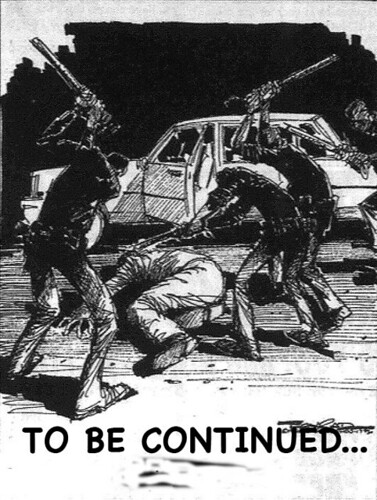
The Time I Got Arrested For Holding A DVD (Part 1)
So it was a fine summer day when I was coming out of my apartment building. I was heading to Blockbuster to return a DVD.
After walking a few blocks three plain-clothes NYC police officers approach me. They quickly make their presence known by getting presumptuous with my civil rights and forcing me against a fence. They search me while demanding information about something I know nothing about:
“What did you get from the store?”
“Let’s see what’s in the bag you have.”
“What is it you were shopping for?”
Unfortunately for me I had not been in a store, I was not carrying a bag, only the DVD I was returning, and I wasn’t shopping or planning to go shopping anytime soon.
So my answer was, “What the fuck is going on here??!!? I have no idea what you’re talking about.”
Meanwhile these guys are not acting like they’re actually curious about my response. No, they’re acting like they got the answers from god himself a few hours ago and the questions are merely a formality. After forcing me against the fence, frisking me pretty physically, and looking in every nook and cranny you can find on a DVD case, there’s now a crowd beginning to form on the street.
Undoubtedly spurred on by the lack of material evidence, they continue their informal interrogation.
“what were you doing coming out of that store?”
“what store?”
“look. You know what store. What were you doing?”
“I don’t know what you’re talking about. I just came out of my house and I’m going to blockbuster. This is my first time outside today”
The officers pause to consider this unexpected fact.
Meanwhile I’m beginning to piece it together. Next to my apartment building there’s a bodega, and very often bodegas are fronts for weed-shops (something I, of course, know nothing about, other than they may exist). Anyways, I figure these officers thought I was coming out the store instead of my apartment. I relay this revelation to them.
They are not eager to reevaluate their situation but they do eventually back off me a little. At which point I get a little more assertive in expressing my dissatisfaction. I sort of play to the crowd and talk about how a “black man can’t even return his DVD on time no more.” I’m jabbing at them, but nothing too inflammatory.
The officers are talking amongst themselves, presumably trying to figure out how they botched this situation up. They’re also telling me to calm down, which of course only gets me more fired up. They’re the ones in the wrong, I have full right to be causing a ruckus, plus my ruckus was fairly tame all things considered. The crowd on the street formed because of their actions, not mine.
After some more back and forth I eventually raise my hands, one of which is holding the DVD, and declare, “I can't believe this is happening! This is ridiculous!!” I say it loud, but I’m quite certain that harsher, more threatening words have been used in similar scenarios. But apparently that’s not what the officer in charge thought, because upon hearing that he looked at me and then at the DVD case and said, “you’re threatening to assault a police officer.” He then tells one of his partners to cuff me and take me in.
In shocked disbelief, my hands are cuffed behind my back. My tone immediately changes from challenging to compliant. I apologize and say I got out of line. But the head guy is no longer listening. Still his order to take me in was so preposterous that a couple of his partners made an effort to verify that he genuinely wanted them to take me in. He did.
I was cuffed and taken to a minivan that was parked around the corner and down the block a bit. And that’s when this unfortunate misunderstanding evolved into an incredible educational experience ...
To Be Continued
Part 2
Part 3
.
After walking a few blocks three plain-clothes NYC police officers approach me. They quickly make their presence known by getting presumptuous with my civil rights and forcing me against a fence. They search me while demanding information about something I know nothing about:
“What did you get from the store?”
“Let’s see what’s in the bag you have.”
“What is it you were shopping for?”
Unfortunately for me I had not been in a store, I was not carrying a bag, only the DVD I was returning, and I wasn’t shopping or planning to go shopping anytime soon.
So my answer was, “What the fuck is going on here??!!? I have no idea what you’re talking about.”
Meanwhile these guys are not acting like they’re actually curious about my response. No, they’re acting like they got the answers from god himself a few hours ago and the questions are merely a formality. After forcing me against the fence, frisking me pretty physically, and looking in every nook and cranny you can find on a DVD case, there’s now a crowd beginning to form on the street.
Undoubtedly spurred on by the lack of material evidence, they continue their informal interrogation.
“what were you doing coming out of that store?”
“what store?”
“look. You know what store. What were you doing?”
“I don’t know what you’re talking about. I just came out of my house and I’m going to blockbuster. This is my first time outside today”
The officers pause to consider this unexpected fact.
Meanwhile I’m beginning to piece it together. Next to my apartment building there’s a bodega, and very often bodegas are fronts for weed-shops (something I, of course, know nothing about, other than they may exist). Anyways, I figure these officers thought I was coming out the store instead of my apartment. I relay this revelation to them.
They are not eager to reevaluate their situation but they do eventually back off me a little. At which point I get a little more assertive in expressing my dissatisfaction. I sort of play to the crowd and talk about how a “black man can’t even return his DVD on time no more.” I’m jabbing at them, but nothing too inflammatory.
The officers are talking amongst themselves, presumably trying to figure out how they botched this situation up. They’re also telling me to calm down, which of course only gets me more fired up. They’re the ones in the wrong, I have full right to be causing a ruckus, plus my ruckus was fairly tame all things considered. The crowd on the street formed because of their actions, not mine.
After some more back and forth I eventually raise my hands, one of which is holding the DVD, and declare, “I can't believe this is happening! This is ridiculous!!” I say it loud, but I’m quite certain that harsher, more threatening words have been used in similar scenarios. But apparently that’s not what the officer in charge thought, because upon hearing that he looked at me and then at the DVD case and said, “you’re threatening to assault a police officer.” He then tells one of his partners to cuff me and take me in.
In shocked disbelief, my hands are cuffed behind my back. My tone immediately changes from challenging to compliant. I apologize and say I got out of line. But the head guy is no longer listening. Still his order to take me in was so preposterous that a couple of his partners made an effort to verify that he genuinely wanted them to take me in. He did.
I was cuffed and taken to a minivan that was parked around the corner and down the block a bit. And that’s when this unfortunate misunderstanding evolved into an incredible educational experience ...
To Be Continued
Part 2
Part 3
.
Sunday, February 12, 2012
Stevie Wonder Concert Report: Part 1
 A few weeks ago Stevie Wonder performed at Madison Square Garden in New York City, and The Assimilated Negro was lucky enough to have a ticket ...
For Once In My Life: Before heading to Stevie Wonder's concert I asked on my blog what the appropriate outfit might be. Concerts are always a little weird for choosing an outfit because you're going to a special event, so you want to dress up, but it's music, and you're going to "jam" and "groove" and "be chill" so you don't want to overdress.
With a Stevie Wonder concert you also have to negotiate the appropriate reverence (no shredded or torn clothes; this means you, white people & hipster-punk negroes), as well as the full age spectrum of Stevie's audience, which is basically from newborn - to old guys being wheeled in as their last dying request. So while I only have two outfits regardless, I thought the matter demanded some extra consideration.
As I say in that post, I ascribe Stevie Wonder no lesser value than proof of god's existence, but despite his godliness, I wasn't sure what a concert of his would be like. Michael Jordan also lived much of his life as God's vessel, but he wasn't the same as he got older. And when spoken of as an artist certainly Stevie, like Jordan, is a performer nonpareil, but we also have to acknowledge that Stevie's contemporary material doesn't strike the same universal chord as his 70s early 80s stuff. He's essentially a genre/brand of music unto himself, but you might cringe a little if you heard he was only playing his "contemporary" material.
(we interrupt this concert review to bring you a TAN Concert Tip/Anecdote for People Saving Their Money: my aunt brought an eggplant sandwich right before the show, we were both unsure how strict the MSG no-food policy would be. Turns out, very strict. security guys examined her bag and demanded that she lose the sandwich (and brownie, and vitaminwater, and other snack). We were 5-10 minutes before showtime and my aunt was determined to be getting in our seats in a timely fashion, yet she didn't want to lose what amounted to $10+ dollars of food, snack and beverages. So she stuck the sandwich down the back of her pants, and brought it in like that until we got to our seats. And we got in no prob. holla! I'm very proud of her perseverance in the face of adversity.)
We get to our seats, which are back row a level above floor seating, in perfect time for what's listed as 8PM show time. But wouldn't you know it, even Stevie runs on CP Time. Tick tock, tick tock. Here comes 8:30, still no blind geniuses taking the stage.
My aunt and I were sitting next to an older black couple, I think it'd be fair to describe them as the ideal Stevie demo. I won't digress on that. To pass the time I figure I'd engage in some fun Q&A on Stevie Wonder trivia. First question: how old is Stevie? I ask my aunt and she suggests 50s, and even hints 40s possibly. I say no way, and suggest 60s might be more accurate.
I eventually ask Stevie's Target Demo, and the wife who is obviously the spokesperson for the couple says that he's definitely in his 60s because "he was 58 when his last child was born." Turns out Stevie Wonder is 57. So, there goes the Target Demo.
Just as we start approaching 8:40 I go to get some popcorn so I can pass the down time picking kernels out of my gums, and just as I get on line I hear the roar of the crowd. I rush off line -- it was short -- to see Stevie being escorted out by his daughter Aisha. I go back and get my popcorn -- the initial applause for his coming on stage lasted the length of the whole concession run – as i get back to my seat Stevie is just starting to address the crowd. As our second and final bit of Stevie trivia my aunt tells me she thinks Aisha is the baby who cries and gurgles on "Isn't She Lovely." Awwww. I offered a firm eyebrow-raise to express my appreciation of the trivia and settled in with my popcorn eager for a good show.
Visions: Before anything gets underway, Stevie walks to the front of the stage and talks to the crowd. He thanks everyone for showing and tells the heartwarming story of how the show was inspired by the passing of his mother in May of '06. After she passed Stevie basically shut everything down for a while, but then she came to him in a vision one night and and told him to stop mourning and get out there and do his thing. And when he called his producers and agent, they thought it'd be a year to organize and plan, but he made it happen in a couple weeks, and has been touring and reinvigorated since.
(Ironically i just wrote a guide to coping with the loss of your fav artists's mama. I think Stevie is my favorite artist, and i herby nominate his mama's passing as a holiday. OR we can just make his birthday a holiday. Seriously. If a thug like Christopher Columbus is honored, Stevie Wonder is waaaaaaaay ahead of that fool. )
Once Stevie gives his intro the show opens with he and his daughter doing a duet of "Love's In Need of Love Today." It's sweet, and she's a good enough singer, but after a couple verses you can't help but think .... okokokokokok, thanks "Isn't She Lovely" baby, but time for Stevie.
After the duet he segues into “To High” and then “Visions” as the first extended showpiece. At the end of "Visions" Steve picks up the tempo and gets militant and angry, riffing off the song and singing how he envisions a better world and doesn't understand how in 2007 we're not there yet. "He can't understand it." And "it's unacceptable." Making war for peace (Iraq). "I can't understand it!" Jena 6. "2007, it's unacceptable!" No healthcare. "I can't understand it, it's unacceptable!" It's kind of corny writing about because it's the same entreaties we hear every day, but when Stevie gets all adamant with his preach-singing, you kind of feel it. I was ready to sign some petitions and beat up some capitalist pigs. In 2007 the drama is unacceptable!
Part 2 continues here ....
Saturday, February 11, 2012
Kinsleydamus on Michael
 Before I trot out a bunch of MJ posts, I wanted to point at what I found to be the most striking article I've read in the past week. That being Michael Kinsley's "The Prisoner of Commerce" on The New Republic.
The commerce/capitalist angle tells so much about MJ:
This points up a second way Michael Jackson's sacrifice for art is different from, say, van Gogh's. Jackson's art is also big-time commerce. Corporations supervised his development, and even bigger corporations are making millions off of him: CBS (which features Jackson on the cover of its 1983 Annual Report), Pepsico (which has $50 million riding on a Jackson ad campaign). Time Inc. (which sells magazines by putting him repeatedly on its covers), and others. It's happened in front of millions of paying customers.
So many people, so many corporate entities with a huge investment in one human being. So clearly not a way to live.
Kinsley also adds good points on the freakish elements of Jackson's personality being lapped up and/or exploited as part-and-parcel with his art. He takes a Time magazine cover to task for glorifying quotes like Steven Spielberg (after E.T.) saying, "He's like a fawn in a burning forest ... I wish we could all spend some time in his world." Yes, a fawn in a burning forest does sound like a rather pleasant afternoon now that you mention it, Steven.
Many of these "we're all complicit" takeaways are embedded in the tributes and articles being trotted out now, but the trump card here is Kinsley wrote this in 1984, when Jackson was 25. It's positioned as one of these counterintuitive articles that now represent the instinctive path for journalists. In hindsight the Spielberg quote, or Jane Fonda's "His intelligence is instinctual and emotional, like a child's." are ludicrous. Obvious warning signs. Back then they were part of the MJ publicity-puffery machine. Part of his aloof cool.
Kinsley is a big-time alpha-journalist with plenty of credentials on his resume. But as someone who leans apolitical, this is the sort of piece that gets me on his bandwagon. I want to call it incredibly prescient, but at 25 MJ had already been a "prisoner of commerce" for 15-20 years. So I guess it just underscores our collective lack of reflection, our willingness to be swept away.
But take MJ's capitalist incarceration, and throw in the child abuse and racism and you have the three pillars of his dysfunction. The imperfect storm that resulted in something that was more natural phenomenon than relatable human.
The Prisoner of Commerce [TNR]
Friday, February 10, 2012
Michael Jackson RIP: "ABC"
The End of Pop, looking at the story and legacy of Michael Jackson one song and video clip at a time.
1.2: The Wicked Witch of Motown
The songwriting collective that bequeathed MJ and The Jackson 5 four #1 singles was called "The Corporation", and they remind me of the wicked witch in fairy tales who shows up when The Prince or Princess is born and gives some sparkly gift that's also a terrible curse only realized over time. Like a diamond ring that allows the wearer to turn any piece of doodoo they touch into gold, but then every ten years, on your birthday, one of your fingers fall off.
That character in fairy tales is usually mean, and I wouldn't want to ascribe the karmic sin of "evil intent" to The Corporation -- songwriting collectives, after all, have the noblest of goals; championing Art over Artists -- but in the narrative of MJ King of Pop, these guys are playing that oft-forgotten role that sets our hero on his predestined journey. The gift-curse of the gold-doodoo ring, or somesuch.
"ABC" is the second #1 single, but the first that showcases a little of this weird yin-yang golden-doodoo relationship.
So on one hand it's a song that's the epitome of "bubblegum soul"; this is what a songwriting collective should produce: Fun, bouncy, danceable hits. On a musical-enjoyment level, it's brilliant.
But then, on the other hand, from a distance you might think: hey, wait a minute. did that 12-year-old befroed boy just tell the girl (presumably older) "to git up and show him what she can do?" And how "t-t-t-teacher's gonna show her how to get an 'a'?" Huh? What in tarnation is this fresh befroed boy talking about? What does he know enough about to t-t-t-teach anyone?
This is a definite theme from the early Jackson 5 era. There's an empty soulless precociousness that conjures images of Little Miss Sunshine beauty pageants and child labor laws.
1.2: The Wicked Witch of Motown
The songwriting collective that bequeathed MJ and The Jackson 5 four #1 singles was called "The Corporation", and they remind me of the wicked witch in fairy tales who shows up when The Prince or Princess is born and gives some sparkly gift that's also a terrible curse only realized over time. Like a diamond ring that allows the wearer to turn any piece of doodoo they touch into gold, but then every ten years, on your birthday, one of your fingers fall off.
That character in fairy tales is usually mean, and I wouldn't want to ascribe the karmic sin of "evil intent" to The Corporation -- songwriting collectives, after all, have the noblest of goals; championing Art over Artists -- but in the narrative of MJ King of Pop, these guys are playing that oft-forgotten role that sets our hero on his predestined journey. The gift-curse of the gold-doodoo ring, or somesuch.
"ABC" is the second #1 single, but the first that showcases a little of this weird yin-yang golden-doodoo relationship.
So on one hand it's a song that's the epitome of "bubblegum soul"; this is what a songwriting collective should produce: Fun, bouncy, danceable hits. On a musical-enjoyment level, it's brilliant.
But then, on the other hand, from a distance you might think: hey, wait a minute. did that 12-year-old befroed boy just tell the girl (presumably older) "to git up and show him what she can do?" And how "t-t-t-teacher's gonna show her how to get an 'a'?" Huh? What in tarnation is this fresh befroed boy talking about? What does he know enough about to t-t-t-teach anyone?
This is a definite theme from the early Jackson 5 era. There's an empty soulless precociousness that conjures images of Little Miss Sunshine beauty pageants and child labor laws.
Thursday, February 09, 2012
WYSIWYG: Sex On Shrooms (Pt. 1)
Last night I read at WYSIWYG: Worst. Sex. Ever. It was my first time reading for a crowd. I've performed, but never read for people that actually paid money to have words read to them. So I was a little nervous. But I also felt good, because I used to read in class all the time. In fact I was a fairly dominant reader in grade school. Always had the hand up strong, confident, just thinking, "if you want the shit read right, call on this motherfucker right here. Don't call on the stupid motherfucker who might get left back over there." So anyways, I think that background helped me get through the experience in one piece. I think there will be video of the performance, and if/when I can get my hands on it, I'll post it. In the meantime, in between time, I'll post the story and the song/epilogue (that I didn't get to perform) here. Thanks to the TAN supporters that were in the house, especially whoever was yelling "Holla!" in the beginning, that always helps a negro feel at ease.
Here's the video of the reading.
I'll be posting the story in segments, since it's sort of long for one big post.
And for the record, the following is a true story based on a sort of true story.
I went with a straightforward title on this and called it, "The Time I Had Sex On Mushrooms" Or alternatively "How I Got My First Wife, But Not Really"
An underestimated part of the assimilation process is the drug culture.
It’s always been interesting to me that rappers and street thugs are stereotyped as the “drug dealers,” “drug lords,” the “proud purveyors of proscribed paraphernalia and potent, perniciously poisonous product.” But when I was growing up in the Bronx, all I ever saw was weed. That was it.
Then when I went away to boarding school (choate) and college (trinity), it was a different story. This was when I had my mind opened - pot, coke, Ritalin, qualudes, lsd, mushrooms, MDMA, and that’s just the bare essentials. Maybe I was a naïve boy, but this is when I saw real drugs. And real drug users. At home in New York City, on the Lower East Side of Manhattan, sure we had crackheads. But then I’d go away to Connecticut, presumably getting away from the toxic environment, and now there’s motherfucking crackheads going to school with me. My freshman year in college, we had crackheads all over the place. Motherfuckers had money, but they were still crackheads.
Anyways, the universal pervasiveness of crackheadedry isn’t the point today, it’s just a little preamble to demonstrate I didn’t know anything about mushrooms until I went away to school.
So this particular episode started out with a big group. It was freshman year, and just one of those classic college weekends where twenty whipper-snappers get together on a Saturday afternoon and decide they’re going to get wasted. We were going to trip all day and drink all night.
There was an electricity in the air, that feeling of kids about to do a lot of wrong shit. Many of the veterans were breaking off into groups, planning different activities to do during the trip. For me, it was only my second experience with shrooms, and most of the activities sounded too advanced for someone planning to be insane for at least the next 6-8 hours. Based on my first experience, I was fine with just hanging around in the dorm staring at walls and floors. So I ended up with a group that stayed in the dorm. Three or four of us went to a room, and eventually I ended up paired off with this girl.
This girl, let’s call her Kate, was pretty. We lived in the same dorm, and saw each other around, but didn’t really know each other. So we ended up hanging out, and when you’re tripping and meeting someone it can either go horribly or swimmingly. And she and I were like effortless laps in the English Channel (this particular line was thrown in specifically for literary peeps, and because it was a "reading series," which is amusing because it's not phenomenally "literary"). We developed this trippy thing where we’d talk and then both of us would get thirsty at the same time and go to the hallway for a drink. Then we’d laugh and note our “thirst synchronicity” and start a new tangent.
After bonding for a couple hours, eventually some other friends from the group barged in on our connecting-session-for-two and announced they were going across campus to North, another dorm, and I was to join them. I wasn’t eager to leave Kate, but these were my guy friends, and I couldn’t diss my guy friends for some girl I just met while tripping. So I left Kate, and our connection, and our trips to get water, to go across campus with the fellas ...
continue Sex On Shrooms (Pt. 2)
Here's the video of the reading.
I'll be posting the story in segments, since it's sort of long for one big post.
And for the record, the following is a true story based on a sort of true story.
I went with a straightforward title on this and called it, "The Time I Had Sex On Mushrooms" Or alternatively "How I Got My First Wife, But Not Really"
An underestimated part of the assimilation process is the drug culture.
It’s always been interesting to me that rappers and street thugs are stereotyped as the “drug dealers,” “drug lords,” the “proud purveyors of proscribed paraphernalia and potent, perniciously poisonous product.” But when I was growing up in the Bronx, all I ever saw was weed. That was it.
Then when I went away to boarding school (choate) and college (trinity), it was a different story. This was when I had my mind opened - pot, coke, Ritalin, qualudes, lsd, mushrooms, MDMA, and that’s just the bare essentials. Maybe I was a naïve boy, but this is when I saw real drugs. And real drug users. At home in New York City, on the Lower East Side of Manhattan, sure we had crackheads. But then I’d go away to Connecticut, presumably getting away from the toxic environment, and now there’s motherfucking crackheads going to school with me. My freshman year in college, we had crackheads all over the place. Motherfuckers had money, but they were still crackheads.
Anyways, the universal pervasiveness of crackheadedry isn’t the point today, it’s just a little preamble to demonstrate I didn’t know anything about mushrooms until I went away to school.
So this particular episode started out with a big group. It was freshman year, and just one of those classic college weekends where twenty whipper-snappers get together on a Saturday afternoon and decide they’re going to get wasted. We were going to trip all day and drink all night.
There was an electricity in the air, that feeling of kids about to do a lot of wrong shit. Many of the veterans were breaking off into groups, planning different activities to do during the trip. For me, it was only my second experience with shrooms, and most of the activities sounded too advanced for someone planning to be insane for at least the next 6-8 hours. Based on my first experience, I was fine with just hanging around in the dorm staring at walls and floors. So I ended up with a group that stayed in the dorm. Three or four of us went to a room, and eventually I ended up paired off with this girl.
This girl, let’s call her Kate, was pretty. We lived in the same dorm, and saw each other around, but didn’t really know each other. So we ended up hanging out, and when you’re tripping and meeting someone it can either go horribly or swimmingly. And she and I were like effortless laps in the English Channel (this particular line was thrown in specifically for literary peeps, and because it was a "reading series," which is amusing because it's not phenomenally "literary"). We developed this trippy thing where we’d talk and then both of us would get thirsty at the same time and go to the hallway for a drink. Then we’d laugh and note our “thirst synchronicity” and start a new tangent.
After bonding for a couple hours, eventually some other friends from the group barged in on our connecting-session-for-two and announced they were going across campus to North, another dorm, and I was to join them. I wasn’t eager to leave Kate, but these were my guy friends, and I couldn’t diss my guy friends for some girl I just met while tripping. So I left Kate, and our connection, and our trips to get water, to go across campus with the fellas ...
continue Sex On Shrooms (Pt. 2)
Subscribe to:
Posts (Atom)
